一年でいちばん暑さが極まる頃、大暑を迎えました。せみの声が朝から響き、道路の向こうには陽炎が揺れています。夕方、玄関先に打ち水をすると、土の匂いとともに、ほんの少し風が涼しくなる。そんな昔ながらの知恵が、今も夏の暮らしに息づいています。
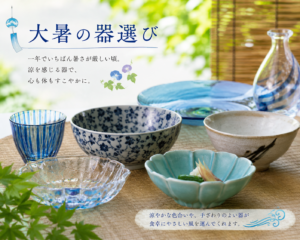
大暑の食卓といえば、まず思い浮かぶのは冷たい麺ではないでしょうか。つるりとしたそうめんを、氷を浮かべた鉢に泳がせる。染付の深鉢なら、白い麺に藍の色が映えて、目にも涼しい一皿になります。つゆを注ぐ蕎麦猪口は、ひとつずつ絵柄を変えて選ぶのも楽しいもの。家族それぞれの「自分の猪口」が決まっていく、そんな夏もいいものです。
大暑の時期には、土用の丑の日もめぐってきます。香ばしいうなぎの蒲焼きには、少し大ぶりの長皿がよく合います。焼き色の美しさを引き立てるのは、意外にもシンプルな白磁や、落ち着いた色合いの和皿。ごちそうの日こそ、器がひと役買ってくれます。
暑さで食欲が落ちる日は、小さな豆皿に少しずつ。梅干し、冷奴、きゅうりの浅漬け。ひと口ずつの彩りが、食卓に元気を運んでくれます。よく冷えた麦茶を湯呑みに注げば、氷を使わなくても、陶器の手ざわりがひんやりと心地よく感じられるから不思議です。
当店では、夏の食卓に寄り添う器を、季節に合わせてご用意しています。暑さをしのぐ工夫は、器選びからも始められます。大暑の毎日を、どうぞ健やかにお過ごしください。
In the traditional Japanese calendar, the year is divided into twenty-four seasonal periods. The one beginning in late July is called Taisho, meaning “great heat” — the hottest stretch of the year. Cicadas sing from early morning, and in the evenings, people still practice uchimizu, sprinkling water on the ground to cool the air. Small rituals like this shape summer life in Japan.
Summer meals here lean cool and light. Thin white noodles called somen are served chilled in a bowl of ice water, then dipped into sauce held in a small cup called a soba-choko. Traditionally, each family member has their own — choosing a favorite pattern is part of the fun. Blue-and-white porcelain, known as sometsuke, is especially loved in summer, because the indigo patterns look refreshing against white noodles.
Late July also brings the custom of eating grilled eel for stamina on the “Day of the Ox.” A long, narrow plate suits the glistening fillet beautifully — often in simple white porcelain that lets the food shine.
At our shop, you’ll find bowls, plates, and small dishes chosen for the season. We hope they bring a touch of coolness to your summer table.