毎度ありがとうございます。商売繁盛三島大社前「陶器のすぎうら」でございます。
御来店の際には、何なりとお気軽に当店店員までお声掛け下さいませ。
先ずは当ページームをご覧になって、ご不明の点はFAX、お電話にて気軽にお問い合わせ下さい。
連絡先 静岡県三島市大社町1-30 杉浦陶器店電話 055-975-0219 FAX 055-975-0237
霜降の器選び
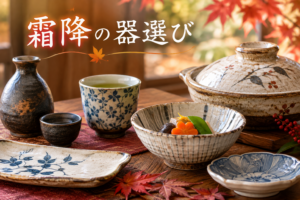
今年の霜降は、十月二十三日ごろ。
秋が深まり、朝の空気に冬の気配がまじりはじめる頃です。
草の上の露が冷えて、霜に変わっていく。
そんな季節の名前です。
三島の朝も、ずいぶん冷えるようになりました。
晴れた日には、富士山の頂がうっすらと白く見えます。
三嶋大社の境内でも、木々の葉が少しずつ色づいてきました。
この時期、食卓にも変化が訪れます。
冷たい麺より、湯気の立つ汁もの。
ガラスの器より、手に持って温かい器。
体が自然と、ぬくもりを求めはじめます。
そこでおすすめしたいのが、土ものの器です。
陶器は厚みがあり、熱がゆっくり伝わります。
熱いお茶を注いでも、手にやさしい。
そして、冷めにくい。
寒い季節にこそ、その良さが感じられます。
たとえば、少し大ぶりの湯呑み。
朝の一杯を、両手で包むように持ってみてください。
指先から、じんわりと温かさが伝わってきます。
新米の季節には、お気に入りの飯碗を。
きのこや根菜の煮物には、深めの小鉢がよく似合います。
蓋付きの器なら、料理の温かさを食卓まで運べます。
色で選ぶのも、この季節の楽しみです。
熟した柿を思わせる、柿釉の赤茶色。
落ち葉のような、飴釉の深い色。
そして白い粉引の器は、霜の降りた朝の景色によく似ています。
器を少し替えるだけで、食卓に季節がやってきます。
冬支度は、器からはじめてみるのもいいかもしれません。
杉浦陶器店では、秋から冬に活躍する器を取りそろえています。
三嶋大社にお参りの際は、どうぞお気軽にお立ち寄りください。
次回は、冬のはじまり「立冬」をお届けします。
Choosing Tableware for Sōkō
Around October 23rd, Japan’s calendar marks Sōkō (Frost Descent).
It is one of the twenty-four seasonal divisions of the traditional year, each lasting about two weeks.
The name describes a quiet change in nature.
Morning dew grows colder, and slowly turns to frost.
Autumn is deepening, and winter is just around the corner.
Here in Mishima, the mornings have become crisp and cool.
On clear days, the summit of Mount Fuji shows a thin layer of white.
At Mishima Taisha (a historic Shinto shrine just steps from our shop), the trees are beginning to turn red and gold.
As the air cools, the Japanese table changes too.
Cold noodles give way to steaming soups.
Glassware is put away, and heavier, warmer pieces come out.
We begin to crave things we can hold in our hands.
This is the season for stoneware.
Compared to porcelain, stoneware is thicker and more earthy.
Heat passes through it slowly.
Pour in hot tea, and the cup stays gentle in your hands.
And it keeps your drink warm for longer.
Try a slightly larger yunomi (a Japanese teacup without a handle).
In the morning, hold it with both hands.
You’ll feel the warmth spread gently through your fingers.
Autumn is also the season of shinmai (the year’s newly harvested rice).
In Japan, it is a small celebration served in a favorite rice bowl.
Simmered mushrooms and root vegetables look lovely in a deep, small bowl.
And a lidded dish carries the warmth of the food all the way to the table.
Color is part of the pleasure, too.
Kaki-yū, a persimmon glaze, has a deep reddish-brown tone, like ripe autumn fruit.
Ame-yū, an amber glaze, recalls the color of fallen leaves.
And kohiki, a soft white slip, looks just like a frosty morning.
Changing a single dish can bring the season to your table.
In Japan, people prepare for winter in many small ways.
Why not begin with the tableware you use every day?
At Sugiura Pottery, you’ll find pieces that bring warmth from autumn into winter.
If you are visiting Mishima Taisha, please feel free to stop by.
In our next episode, we welcome Rittō, the beginning of winter.
寒露の器選び
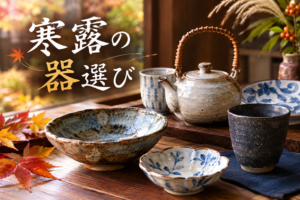
杉浦陶器店の二十四節気シリーズ。
今回は「寒露の器選び」です。
十月八日ごろ、暦は寒露を迎えます。
草の葉に降りる露が、冷たく感じられる頃。
朝の空気が、ひんやりと澄んできます。
空の高いところを、雁が渡っていく季節です。
夏のあいだ活躍したガラスの器を、そろそろ棚の奥へ。
入れ替わりに、手のひらに温もりを感じる器を出してみませんか。
まずは湯呑み。
厚みのある土ものの湯呑みは、熱いお茶を注いでも持ちやすく、冷めにくいのが魅力です。
朝の一杯を、両手で包むように。
それだけで、季節が変わったことを体が知ります。
食卓には、新米が届きます。
いつもの飯碗を、少し見直す良い機会です。
口当たりのやわらかな薄手のものか。
しっかりと手になじむ厚手のものか。
お米のつやを楽しむなら、白い器もおすすめです。
秋刀魚の塩焼きには、長皿を。
細長い魚が、すっと一本おさまる形です。
大根おろしとすだちを添えれば、それだけで秋の一皿になります。
きのこの炊き込みご飯。里芋の煮ころがし。
寒露の献立には、茶色や深い緑の器がよく似合います。
土の色、釉薬のにじみ。
秋の食材と器が、互いの色を引き立て合います。
夜が長くなるこの季節。
燗をつけたお酒を、小さな盃で。
菊の花びらをひとひら浮かべるのも、昔からの楽しみ方です。
器を替えると、同じ部屋でも空気が変わります。
杉浦陶器店では、秋の食卓に寄り添う器をそろえてお待ちしています。
三嶋大社へのお参りの帰りに、どうぞお立ち寄りください。
次回は、霜降。
朝晩の冷え込みが深まる頃の器選びをお届けします。
Choosing Tableware for Kanro
Welcome to the Sugiura Pottery podcast, our series on the twenty-four seasons of the Japanese calendar.
Today: choosing tableware for Kanro (Cold Dew).
The old Japanese calendar divides the year into twenty-four short seasons.
Kanro begins around October 8th.
Its name means “cold dew.”
In the early morning, the dew on the grass feels cool to the touch.
The air turns clear and crisp.
High in the sky, wild geese fly south for the winter.
In Japan, people change their tableware with the seasons.
The glass dishes that kept summer cool go back on the shelf.
In their place come pieces that feel warm in your hands.
Start with a yunomi (a Japanese teacup without a handle).
A thick, earthy stoneware cup keeps tea hot.
And it stays comfortable to hold, even with hot tea inside.
Hold it with both hands on a cool morning.
You’ll feel the season change.
Autumn is also the time of shinmai (the year’s new rice harvest).
New rice is fragrant and glossy.
It’s a good moment to choose a new rice bowl.
Thin and delicate, or thick and solid in the hand.
A white bowl lets the shine of the rice stand out.
Another autumn classic is grilled sanma (Pacific saury), a slender fish at its best this time of year.
A long rectangular plate fits it perfectly.
Add a little grated radish and a slice of citrus.
That’s a complete autumn plate.
Mushroom rice. Simmered taro.
Autumn food looks beautiful on brown and deep green dishes.
The color of the clay, the soft flow of the glaze.
The food and the vessel bring out each other’s colors.
As the nights grow longer, try warm sake in a small cup.
An old custom is to float a single chrysanthemum petal on top.
In Japan, the chrysanthemum is a symbol of long life.
Changing your tableware can change the feeling of a whole room.
At Sugiura Pottery, we have pieces for your autumn table.
We’re just by the gate of Mishima Taisha, the city’s great shrine.
Please stop by after your visit.
Next time: Sōkō (Frost Descends), when the mornings grow colder still.